top of page

Blog

Stories, updates, and insights from the heart of the Superior National Forest and the people who care for it.

Search

The goal: Paddle into the Boundary Waters Canoe Area Wilderness (BWCAW) with a small team to clear a very remote section of the Sioux Hustler Trail. This is a 30-mile loop that requires stewardship from several groups such as the Boundary Waters Advisory Committee and Wilderness Volunteers, and Friends of the Superior National Forest was excited to be part of this work. We were tasked with clearing the trail from Heritage Creek to Pageant Lake.


The team: Friends of the Superior National Forest's Wilderness Project Coordinate Dan Wilder was joined by two incredible volunteers, each with a ton of experience.

Our crew at Fenske Lake Campground

The team left around noon on July 9 for a 4-night basecamp, but it was going to be a long paddle to get to their site. Distant fires were burning, but there was no immediate cause for concern.

Until there was.


The same day the crew paddled into the BWCAW, the Sioux Fire began. By the time the crew checked in via satellite communicator that evening, paddlers were already being told to evacuate the area. The Sioux Hustler Trail was soon officially closed, and the following morning, having just gotten settled into the campsite, the team had to pack up and begin the arduous nine-mile paddle back to their entry point.


Distant fires were about to get not-so-distant. Photo by Dan Wilder.

Although the team did not make it to the section of the Sioux Hustler Trail they intended to steward, on their way into and out of the area, they were able to accomplish some important work, including:

  • 1 dead birch tree felled

  • 1 tree removed from the Devil's Cascade Portage

  • 2 campsites maintained

  • 2 fire grates cleaned

  • 3 latrines assessed and reported to the U.S. Forest Service

    Photo by Dan Wilder
    Photo by Dan Wilder

The team returned safely to the entrypoint around sunset on the day after going in. According to Dan Wilder, "Their flexibility, teamwork, and positive attitudes turned an unexpected evacuation into a rewarding stewardship experience."


We're incredibly grateful for our volunteers during what turned into a much more stressful trip than anticipated. We also wish to extend a huge thank-you to Tom Yankowiak with the U.S. Forest Service for helping us to assess the situation so we could relay messages to our team.


The fires impacting the Superior National Forest have made national news this summer, and the impact to the forest is severe. We're still planning some work in the BWCAW this summer - hopefully without an evacuation this time - and we'd love to have you join us.


Volunteers are vital to keeping public lands open and accessible. Most of our volunteers contribute a few hours or days, but others contribute weeks, months, or even an entire season. Groups who can volunteer for longer stretches help public land management agencies to complete more technical or longer duration projects. In 2025, with support from the Friends of the Superior National Forest, the Superior National Forest hosted the Conservative Anabaptist Service Program (CASP), whose members volunteered for an entire month working alongside recreation and heritage Forest Service staff.  

Group photo left to right: Jeremiah Zook, Elliot Beachy, Evan Beachy, Isaiah Beachy, Demetrius Beachy, Cameron Beachy, and Irvin Miller.


CASP’s vision is for its participants to fulfill their call of service through volunteerism by responding to the nation’s need for labor in forestry, conservation, or disaster project work.  Seven young men ages 18-20, from across the county, spent 22 days this past fall working on trails and portages in the Superior National Forest and Boundary Waters Canoe Area Wilderness (BWCAW). They completed an astonishing 1,400 hours of service work!

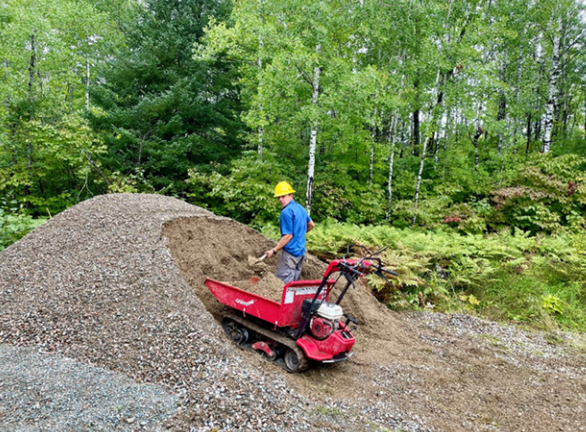
CASP member Irvin Miller shovels gravel for portage tread work at the Wood Lake Portage-Superior National Forest. USDA Forest Service photo by Christine Kolinski


“I wanted to do CASP to support the country in a non-resistant way. I don’t believe in the violence of war, but I want to support the country. My brothers have also done CASP, and I’ve heard good things about it. I also like camping out in the woods, so this was a great fit.” – Irvin Miller, one of four immediate family members that has done CASP trail service work.


A set of new stairs at Ojibway Lake Recreation Area-Superior National Forest by the 2025 CASP crew. USDA Forest Service photo by Mike Running


The volunteers completed the following: 

  • Resurfaced almost a mile of BWCAW portage with gravel, built two 30’ rock turnpikes (a trail feature that elevates the trail to keep it dry), and installed 49 drainage and erosion control features. 

  • Repaired an 80’ rotten boardwalk by disassembling it, leveling it with jacks and replacing the deck boards. 

  • Built a new wooden stairway at a recreation area, cleared vegetation along trails at a Nordic trail system, brushed and cleared a four-mile portage trail, and helped staff maintain and restore several historic log cabins.  


The bridge to Wood Lake the group repaired. USDA Forest Service photo by Christine Kolinski


The volunteers were surprised at how friendly visitors were to them, stopping to talk and thanking them for their work. We're incredibly grateful for these CASP volunteers and the Forest Service staff who coordinated their work! Special thanks to Christine Kolinski for her work on this story.


Are you interested in volunteering to meet new people, gain new skills, and give back to the public lands around you? Friends of the Superior National Forest would love for you to join us! We'll be announcing our 2026 projects soon!


While many seek out the Boundary Waters Canoe Area Wilderness (BWCAW) for their summer adventures, the Superior National Forest (SNF) reminds visitors of the variety of recreation opportunities that exist outside of Wilderness. These locations are perfect for those looking for a more impromptu trip, for a camping experience without reserving a BWCAW permit, and for campers of all ages and abilities to enjoy as some are accessible by motorboat, vehicle, or off-highway vehicles. To learn about the types of camping on the SNF, check out SNF camping and cabins.


Today we'll highlight some recreation opportunities in the Kawishiwi Ranger District near Ely, MN!


Canoe on the beach at Fenske Lake landing. USDA Forest Service image by T. Terrell
Canoe on the beach at Fenske Lake landing. USDA Forest Service image by T. Terrell 

Ely is in the heart of Superior National Forest with a population of around 3,500 year-round residents. The Kawishiwi Ranger District office is located on the east end of town and is a great resource for questions and trip planning. Here are three areas to add to your bucket list this summer! 

Circle Route (Twin Lakes-Fenske Lake-Grassy Lake-Bass Lake Canoe Route)-This route offers 10 lakes and two rivers with first come-first served, backcountry campsites like those in the BWCAW. Fish, swim, paddle, camp, nap, and enjoy this fun canoe route. 

Nels Lake This lake has two first come-first served, backcountry sites that resemble near- wilderness single party site. They are accessible by foot or boat. 

Tofte Lake-This lake offers four first come-first served, backcountry campsites and a boat ramp. Four other nearby lakes make for fun day trip options.  


Remember to practice Leave No Trace principles. Be Bear Aware and store your food and garbage properly. All backcountry and rustic campsites are first-come, first-serve, with no fee for camping. Make sure to check area fire restrictions, alerts, closures, and office hours prior to your visit on the website. Have a blast making memories! 


bottom of page